Ask a team why they believe in the current direction and the evidence arrives instantly: the pilot that worked, the customer who renewed, the metric that moved. Ask what evidence points the other way and the room goes quiet — not because there is none, but because nobody wrote it down, and unwritten evidence of that particular kind does not survive.
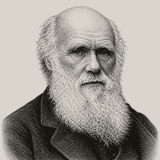
Charles Darwin knew this about himself and treated it as an operating constraint. In the autobiography he wrote for his family, he described a rule he had followed for decades: whenever he met a published fact or observation that contradicted his general results, he made a note of it immediately and without fail. Experience had taught him, he explained, that such facts and thoughts were far more apt to escape the memory than favourable ones. The convenient evidence looks after itself. The inconvenient evidence has to be caught at the door, or it simply leaves.
This is a claim about memory, not morals, which is what makes it so useful. You do not have to accuse anyone of motivated reasoning to justify the practice — you only have to accept that minds file agreeable facts automatically and lose disagreeable ones by default. Twenty years of that asymmetry, compounding daily, and an honest person arrives at total confidence by attrition: every objection encountered, considered reasonable at the time, and gone.
Darwin ran the practice at scale. He kept portfolios of notes against his own theory, and when he finally published On the Origin of Species in 1859, it contained a chapter squarely titled Difficulties on Theory — the strongest objections he knew, stated in his own book, many collected years before an opponent would have raised them. The chapter did not weaken the argument. It is a large part of why the argument held.
The contrary file
The team version costs almost nothing. Keep one shared document per major bet — the strategy, the architecture, the market thesis — titled honestly: evidence against. The rule is Darwin's, verbatim in spirit: the moment anyone meets a fact that tells against the bet — a churned customer whose reason stung, a benchmark that embarrassed the design, a competitor move the thesis said would not happen — it goes in the file that day, with a date and a source. No rebuttals in the file. Rebuttal is a different activity on a different day; the file's only job is to defeat the forgetting.
Then give the file a standing appointment. Once a quarter, the team reads it end to end and asks one question: does the accumulated contrary evidence still look like noise, or has it started to look like a pattern? That reading is where direction changes come from while they are still cheap. The alternative is the usual one — the pattern assembles itself in hindsight, at the postmortem, where everyone suddenly remembers the warnings.
Watch out for
A contrary file can become a graveyard that launders objections: noted, filed, never faced. Recording a fact is not the same as reckoning with it, and a team can perform the first to avoid the second. The quarterly reading is the safeguard, and it needs teeth — at least one entry per review should force an explicit answer: why does this not change our mind?
The other risk is asymmetry of effort. Darwin spent twenty years being fair to objections, and the delay nearly cost him his priority when Wallace arrived at the same theory independently. Fairness to contrary evidence is a discipline for deciding well, not a licence to decide never.
Answer this next
Where does the evidence against your team's current bet live right now — and if the answer is nowhere, what has already been lost?