A journal retracts two hundred papers at once. A bibliometric study traces tens of thousands of retracted articles back to organised production. Editors resign. The response is usually a call to fix peer review.
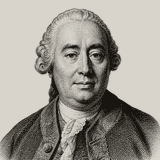
David Hume would say peer review is not what has broken, because it is not what you were relying on.
What the confidence was made of
His central claim about evidence is unglamorous and hard to get around. Every inference you make beyond what is directly in front of you runs on custom — a habit laid down by having seen one thing follow another, repeatedly — and not on any argument that survives being asked for. Ask why you expect the sun tomorrow and the honest answer is not a proof. It is that it has always done so, and the expectation formed itself.
Apply that to a paper. You read a finding in a reputable journal and you assign it a working credibility somewhere well above a claim in a press release. Ask yourself for the argument behind that, and there isn't one. There is a run of experience: papers of this kind, in journals of this kind, have mostly held up, and the expectation followed.
Now notice the condition that run was formed under. It accumulated across decades in which producing a plausible-looking paper was expensive. It took a laboratory, a dataset, months, and people with reputations they could not afford to spend. Fabrication existed but it was rare because it was costly, and that cost is what the habit was actually tracking.
The cost has changed. The conjunction that trained the expectation has weakened, and habits do not notice. That is his real point, and it is not about publishing at all: a well-formed expectation goes on producing confidence for exactly as long as it takes for the world to change underneath it, and it feels identical from the inside the whole time.
Where that leaves a reader
Not in general scepticism, which is useless. It leaves you with one question to ask of a specific claim you are about to rely on: what is the actual run of experience behind this?
Sometimes there is one. The result has been independently reproduced by people with no stake in it, or it is load-bearing for something physical that works. That is a genuine conjunction and it earns the confidence.
Often there is not, and the substitute is citation count — which is not evidence at all. Citations are other people's habits, formed the same way yours was, compounding. A retracted paper goes on being cited for years afterward, which tells you the citing was never an act of verification.
The practical form is narrow and it is enough: for the one or two findings your decision actually rests on, establish whether anybody has reproduced them. Not whether the journal is respectable. Whether someone independent got the same thing.
Watch out for
Here is where this lens turns dangerous, and Hume walked into it himself.
If every inference is custom, then from the inside a well-drilled prejudice and a sound expectation feel exactly alike, and his account offers no test to tell them apart. He proved that on himself: the footnote to his essay on national characters passed off the impressions of one European who had read European authors as the wide experience his own method demanded. The instrument that dissolves overconfidence cannot certify anything in its place.
Which means this post can be turned into something corrosive with almost no effort. The move that deflates a claim also shrugs off a fair demand for evidence, and nothing in the doctrine says which is happening. Anyone who tells you the literature cannot be trusted is generally proposing that you trust them instead, and their run of experience is shorter than the one they are attacking.
The honest position is narrow: the research record remains the best-tested body of claims anyone has, most of it holds, the fabrication is concentrated in identifiable places, and the reason you know all that is other researchers doing exactly this work in public. Weaken your confidence where the conjunction has weakened. Not everywhere, which is just a different habit.
Answer this next
Take the finding you rely on most in your work and answer one question about it: has anyone with no stake in it obtained the same result independently?
If you do not know, you have been trusting the run rather than the result — which was defensible until recently, and is the thing that has changed.