A project freezes. Then another announces that after a date it will receive no further security patches. Both are running in production at organisations with revenue measured in billions, and in both cases the stated reason is not technical. There was nobody left to do it.
The response this produces is well meant and structurally useless: a wave of sponsorship, a company or two announcing a donation, a thread about how we should all be supporting the people we depend on. Six months later the numbers are back where they were.
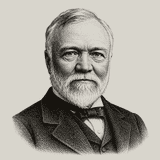
Andrew Carnegie gave away most of a very large fortune and thought hard about why most giving fails. His conclusion is worth borrowing even by people who find the man difficult, which he was.
The condition, not the cheque
He funded some two and a half thousand public libraries. The part that gets forgotten is that he did not simply pay for them.
The offer had terms. The town supplied the site. And the town committed, by public resolution, to fund the library's operation every year afterwards — a proportion of the construction cost, annually, out of taxes, in perpetuity. If the council would not pass that resolution, there was no building.
He was not being difficult. He had a specific view of why one-time generosity fails: a gift that relieves a symptom leaves the recipient exactly as dependent as before, and the only giving that changes anything builds something the community then carries itself. The endowment paid for the thing that was hard to start. The operating commitment paid for the thing that was hard to sustain, and it had to come from the people who benefited, or it would stop the moment the benefactor's attention moved.
Look at how the software version is currently funded and the mismatch is immediate.
Sponsorship is the cheque without the condition. It is discretionary, it is annual at best, it is attached to a named individual rather than to the function, and it is reviewed in the same budget cycle as everything else discretionary. It does not change a maintainer's decision about whether to keep going, because it does not tell them anything about next year.
What the condition looks like here
Three properties, and they are the same three the library resolution had.
Recurring and committed, not discretionary. A maintainer deciding whether to keep going is answering a question about the next three years, and a payment that could stop in March answers nothing.
Attached to the function rather than to the person. Carnegie funded the library, not the librarian. Fund the maintenance of the component, so the money survives the maintainer leaving, which is the event the whole exercise exists to survive.
Paid by the beneficiary, in proportion to the benefit. This is the part firms resist, and it is the part that makes it work.
That is not philanthropy. It is a procurement decision that has been miscategorised for twenty years.
Watch out for
The gospel has a hole in it and this is the right place to say so. It never examines where the surplus came from. The libraries were financed out of a wage, and the same cost discipline that made the fortune is what made the 1892 wage cut at Homestead look, from the ledger, like ordinary good management. Carnegie gave away money that his workers had a plausible claim to have earned, and the arrangement let him choose the ladder rather than answer the claim.
The open source version is uncomfortably exact. A company whose margin depends on unpaid maintenance, funding a foundation out of that margin, has chosen charity over price. Every announcement of a donation is also a statement that this input will continue to be free by default and paid for by grace, which is precisely the arrangement that produced the freeze. The maintainers in these threads are mostly not asking to be sponsored. They are describing an input that was never priced.
He is also a poor witness generally. His optimism read almost every situation as a ladder any willing person could climb, which left him unable to see structural disadvantage or the position of people his own decisions pushed down.
Answer this next
Name the dependency your product could not ship without and that you have never paid for.
Then find out which budget it would have to come out of. If the honest answer is a thank-you page, you already know what happens the next time one person gets tired.