Start with the thing that does not add up.
Your pay is higher than it was three years ago. The area around you is measurably better off — there are more jobs in it, the station got busy, the empty units on the high street filled in. Every number that describes the place went up. And you are not better off. If anything the month is tighter, and the part that got tighter is the rent or the mortgage.
Most explanations of that are about you. You should have bought earlier, moved sooner, negotiated harder, spent less on the small things. Henry George spent his working life refusing that entire category of answer.
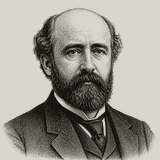
He was a printer who taught himself economics, and he owned one question: why does poverty deepen exactly where progress is greatest? Not why poverty exists — that is easy and every era has an answer. Why the two travel together. He thought the association was not two facts to be explained separately but one fact, and that treating it as a coincidence was how a whole century of clever people had avoided the mechanism.
Where the gain settles
The move his method makes is small and it changes what you are looking at. Do not ask whether the place got richer. Ask where the increase settled.
Something improved near you — a rail link, a school's results, a few good employers, a decent café where a shuttered unit used to be. None of it was made by the person who owns the ground under your flat. It was made by everyone: the employers, the commuters, the council, the people who moved in and made the place worth moving to. But the value it created has to land somewhere, and it lands on the sites.
That is the leak. A landlord who slept through the entire improvement — who did nothing, built nothing, repaired nothing — collects the whole of it in the rent, because what he owns is not the building so much as the position. Your raise arrived at the same time as everybody else's, and the bidding for a fixed number of places absorbed it. The community made the gain and the title took it.
George's own phrase for the result is sharper than "inequality". He described a society dividing into "the House of Have and the House of Want" — a split decided not by how hard anyone worked, but by who held a deed before the improvement arrived.
Which is why the advice about spending less on coffee lands so badly on people in this situation. It is not wrong about arithmetic. It is aimed at the wrong number.
Watch out for
The risk in taking this frame home is that it explains too much.
George leaned on one mechanism for everything, and his own record shows the cost of that. Where housing is expensive because almost nothing has been built for twenty years, the binding constraint is supply and planning, not tenure — and his lens will still hand you the same answer. Where a household is stretched by childcare, by a car it needs for work, by a medical bill or by debt taken on at the wrong moment, the ground rent is a real part of the story and not the whole of it. A single explanation that fits every case is usually a explanation that has stopped being tested.
The second thing to hold: this reasoning stops at diagnosis. George is claimed today by tax campaigns and housing movements that disagree with each other, and reading a nineteenth-century argument as an endorsement of any of them is putting words in a dead man's mouth. What the method gives you is a question about where a gain settles. What you do about it in your own street, and who you vote for, it does not answer and cannot.
Answer this next
Think of one improvement near you in the last three years — a transport link, an employer, a school. Who captured the value it created, and what did they do to create it?