The letter arrives and the number has gone up again, and the obvious explanation is standing right there. Somebody owns your flat, that somebody wants more money, and now you are paying it. Every part of that is true and it still explains almost nothing, because it cannot tell you why the increase is the size it is, or why the identical flat two miles further out went up by half as much.
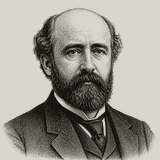
David Ricardo was a stockbroker who made a fortune, retired at forty-two, and spent the rest of a short life building the first real models in economics. His argument about rent is one of the genuinely counterintuitive things in the subject, and it survives being moved two centuries.
He turned the causation around. In his own words, "Corn is not high because a rent is paid, but a rent is paid because corn is high" — and he added that if landlords gave up the whole of their rent tomorrow, the price of corn would not fall by a penny.
The worst place still worth using
What sets rent, on this account, is not the landlord and not the quality of the property. It is the margin: the least desirable position that someone will still accept.
Think about where you live as a set of differences from that margin. A shorter commute. A school you would actually send a child to. A street where the shops are open. None of those were made by your landlord. But they are all differences between your place and the worst place someone would still take — and rent is exactly that difference, collected by whoever holds the title to the better position.
This is why the two flats moved differently. The one further out sits closer to the margin, so there is less difference to charge for. Yours sits further above it, and everything that improved the neighbourhood widened the gap.
It also explains the thing that makes rent arguments so circular. A landlord who charged you less would not be changing the mechanism, only declining a share of it — and the next tenant would bid the difference back. That is not a defence of anybody. It is a statement about where the number comes from, and it means an argument aimed at your landlord's conscience is aimed at the wrong place.
Watch out for
Here is where Ricardo was wrong, and it happens to be the part that matters most to you.
He treated the margin as something fixed by nature — the quality of the land was simply given, and from that he forecast a slow strangling of the economy by rising rents. It did not happen. Free trade and the railways moved the margin itself, and his stationary state never arrived. That is the standing correction to his model and it is also the practical one: the margin is not a fact, it is a result. Build more places worth living in, or make further-out places reachable in twenty minutes instead of an hour, and the whole schedule of differences moves down. Nothing about your landlord has to change for your rent to fall.
The rest of his frame has aged less well and should not be carried home unexamined. He divided society into landlords, capitalists and labourers, which leaves out most of the people you know. He held that wages settle at subsistence in the long run — comprehensively superseded. And he abstracted hard on purpose, assuming things he knew were untrue to get a clean result, which he was honest about and his readers often are not.
Answer this next
Where is the margin for you — the least appealing place you would still have accepted? The gap between that and where you live is the number you are actually paying.