The pilot went well. The demo landed. The satisfaction score is up, the case study is glowing, and the team believes the story it is telling in the review — which is precisely the problem, because everything in how that story was assembled was arranged to make believing it easy.
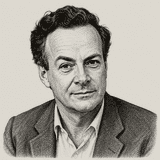
Richard Feynman, in a 1974 commencement address at Caltech, described a standard for honest work that most organisations have never tried. Scientific integrity, he argued, is not merely refraining from lying. It is active: hunting for the ways your own conclusion could be wrong, and reporting them yourself, prominently, before anyone asks. List the checks you skipped. Name the alternative explanations you cannot rule out. Publish the data that did not fit alongside the data that did. His observation about human nature was the uncomfortable part — the person your evidence most easily deceives is you, because you wanted the conclusion before the evidence arrived.
Hold a typical internal success story against that standard. The demo ran on the happy path, with the data that flatters the model and none of the inputs that embarrass it. The pilot customers were the friendliest ones on the list. The metric rose after the launch, and the story credits the launch — the seasonal pattern that produces that rise most years goes unmentioned, not out of dishonesty, but because nobody assigned to celebrate a result goes looking for its innocent explanation.
Report against yourself first
The method transfers as a writing discipline. Any document claiming a result — a pilot readout, an experiment summary, a case for expansion — carries a section the author must write against their own conclusion: what would make this wrong, what was not tested, what else explains the numbers. Not risks of the plan going forward; flaws in the evidence presented. If that section is empty, the review has learned something important about the document.
The deeper version is about sequencing, and Feynman kept illustrating it with simple physical checks: decide before you look what would count as failure. A pilot whose success criteria are written after the pilot cannot fail, and therefore cannot inform. Registering the bar first — this number, this cohort, this period, or we call it a miss — is cheap, takes a paragraph, and converts a story into a test.
He practised the theatrical version of this on the Challenger commission in 1986, dropping a piece of O-ring rubber into ice water at a televised hearing to show it lost resilience in the cold. The demonstration is remembered for its bluntness. The method behind it is the point: go around the official account, find the physical fact, and let it speak against the conclusion everyone preferred.
Watch out for
The standard can be weaponised. A reviewer who demands ever more self-refutation from work they dislike, while waving through work they favour, is using integrity vocabulary to do politics — and Feynman's own celebrated bluntness could shade into performance, a fact his colleagues noted. The discipline binds the author first: it is a standard you hold your own claims to, not primarily a stick for other people's.
It also has a cost curve. Absolute completeness about every doubt would paralyse a team that ships weekly. The honest version scales the scrutiny to the stakes: the throwaway experiment gets a sentence of caveats, the bet-the-roadmap readout gets the full case against itself.
Answer this next
Take the result your team is proudest of this quarter. If you had to write the paragraph arguing it is an artefact — wrong cohort, kind metric, lucky season — what would it say, and who has been allowed to say it out loud?