The decision arrives clean. Four days on site from the first of the month, applied evenly, communicated in a single message so that nobody can claim a different rule was in force for their team. On the slide it looks like an improvement in every direction: more presence, faster decisions, the culture people keep saying has thinned out.
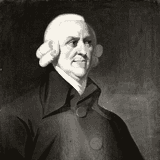
Adam Smith left one objection to plans of that shape, and it is not the objection people expect. He did not say such schemes are wrong, or that the person making them is acting in bad faith. He said they tend to assume the pieces will stay where they are put.
His image was a chess board. The planner arranges the pieces to produce a good position, forgetting that every piece on the board of human society has a principle of motion entirely its own. The pieces do not stay. They go on moving after the hand lifts, and the arrangement that looked so good is the arrangement before any of that happens.
Ask what moves first
Applied to an attendance policy, that turns into a fairly specific exercise, and it takes about twenty minutes with a list of names.
Not: is this policy fair, or is presence good for collaboration. Those are worth arguing but they are arguments about the position. The question here is about motion. Given the way each person is actually situated, what does each of them do in the first month, and does the plan survive that?
Some of those movements are easy to predict once you look. The person who took the job at a lower salary because it came without a commute has just had part of their pay withdrawn, and will price it. The parent whose childcare is arranged around two fixed days does not have a policy problem, they have a logistics problem with a deadline. The person with the strongest outside options is the one for whom moving is cheapest, which is the uncomfortable part: the piece most likely to move first is usually the one you would least like to lose.
Smith supplies the reasoning behind that pricing, from the part of his wage argument that gets read least. Employments are not compared by the money alone. People weigh the whole of the advantages and disadvantages — the hours, the standing, the constancy, the disagreeableness, the trust required — and pay is what balances the rest. A commute added back is a real change to the terms, and it will show up in wages, in turnover, or in quiet non-compliance. It does not simply evaporate because the policy did not mention it.
That gives you the honest form of the question. Not whether staff should be in the office, but: what is the new bargain worth, to whom, and what are they going to do about the difference?
Watch out for
This caution can be used to object to anything, and that is its real weakness.
Every plan moves people, so every plan can be met with the observation that people will move back. Used that way the lens becomes a general licence for inaction, which was never Smith's position: he argued for public works, for schooling paid for out of public funds, and for banking rules, precisely in the cases where leaving people to their own motion produced a bad result. The chess-board caution is an argument against schemes that require people to hold still, not against schemes.
So the discipline is to make it costly. Name the specific person, the specific move you predict, and roughly when. If you cannot do that, you are not applying the caution, you are only expressing distaste for the policy.
There is a second limit worth stating plainly. The dispersed arrangement has its own casualties, and they are harder to see because they never file a complaint: the new joiner who learns nothing by proximity, the decision nobody witnessed being made, the colleague who was never quite absent enough to notice. A mandate is one attempt at a real problem. It is the assumption of stillness that is the error, not the concern.
Answer this next
Take the three people whose departure would hurt most, and for each write the single sentence describing what this policy changes about their week.
Then ask what your plan does if all three act on it in the first month. If the answer is that the plan does not survive that, you have not been told about a morale problem. You have been told about the position after the pieces move.