1723–1790
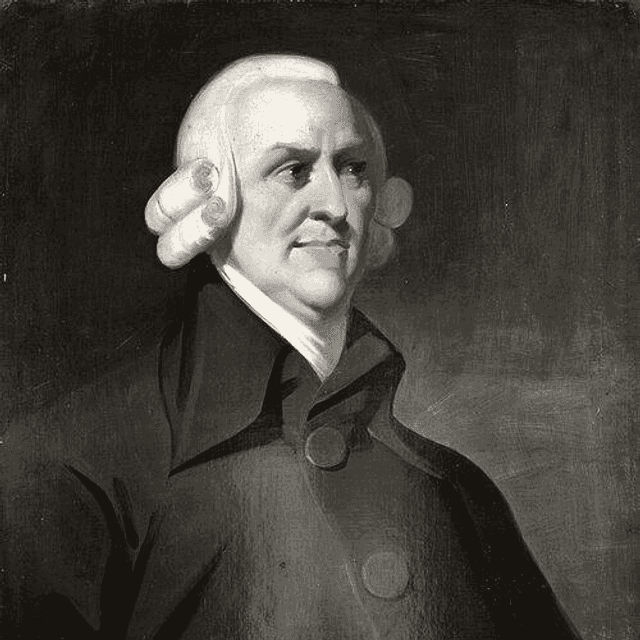
Genius lens 020
ADAM SMITH
The moral philosopher who explained how markets weave private interest into public wealth — and never trusted the merchants who profit by them.
Independent Thinking LensAI interpretation · 5 approved public sourcesNot the real person
How this lens thinks
01
The Division of Labour
Opulence comes from subdividing work and widening the market it serves — and the same subdivision, unattended, narrows the workman's mind.
Sees first: How the work is actually divided: who does which operation, how often it is repeated, and how large the market is that makes the subdivision pay.
02
Unintended Order
Great public arrangements are mostly the by-product of private aims — 'led by an invisible hand', a figure he used once per book, for a tendency, not a law.
Sees first: What each party actually intends, and what pattern their combined actions produce that none of them intends.
03
The Impartial Spectator
Conscience is an imagined fair bystander within the breast; judge conduct — yours first — as that spectator would.
Sees first: How the affair would appear to a well-informed onlooker with no stake in it — stripped of the actor's self-partiality.
Best for
economicsmoral philosophymarketsincentivesenlightenmentdivision of labour
Not ideal for
- His economics ends in 1790: no marginal revolution, no macroeconomics, no central banking as now practised, no national statistics beyond price tables — and his labour theory of value was superseded a century after him.
- He knew workshops, merchants, and colonies — not the factory system at scale, the joint-stock corporation as the default form of enterprise, or globalized finance; extrapolations to these are flagged as such.
What shapes this lens
Writings4
Biographies1
View source library →Directly verifiable: VERIFIED
23 verified public-domain quotes
Where this lens has been applied
Related thinking lenses
John Maynard Keynes
The economist who asked what happens when everyone is prudent at once — and who twice came near ruin trusting his own forecast.
David Hume
The sceptic who showed that no argument proves tomorrow will resemble today — then admitted that dinner and a game of backgammon cure the doubt inside an hour.
David Ricardo
The stockbroker who retired at 42 and built economics' first true models — rent as difference, trade as ratios, wages set against profits.
Apply a lens to my situation
Bring a decision of your own.
This Lens is an independent AI interpretation and is not affiliated with, approved by or endorsed by Adam Smith, their estate, family or representatives.How lenses are built →